Weather Patterns and Their Influence on Competition Tactics in Cricket, Baseball, Horse Racing
Written by Gisela Richter · Nov 19, 2026

Weather Patterns and Their Influence on Competition Tactics in Cricket, Baseball, Horse Racing
Weather conditions shape tactical decisions in outdoor sports where athletes and teams must adapt to variables like precipitation, wind, temperature shifts, and humidity that directly affect playing surfaces and equipment performance. Researchers from institutions across different regions have documented these influences through long-term observational data, showing how rain can soften pitches in cricket while altering ball behavior in baseball and track firmness in horse racing. Data from meteorological agencies indicate that such factors require real-time adjustments in player positioning, equipment selection, and pacing strategies, whereas indoor venues maintain consistent conditions that reduce these variables.
Cricket and Variable Pitch Conditions
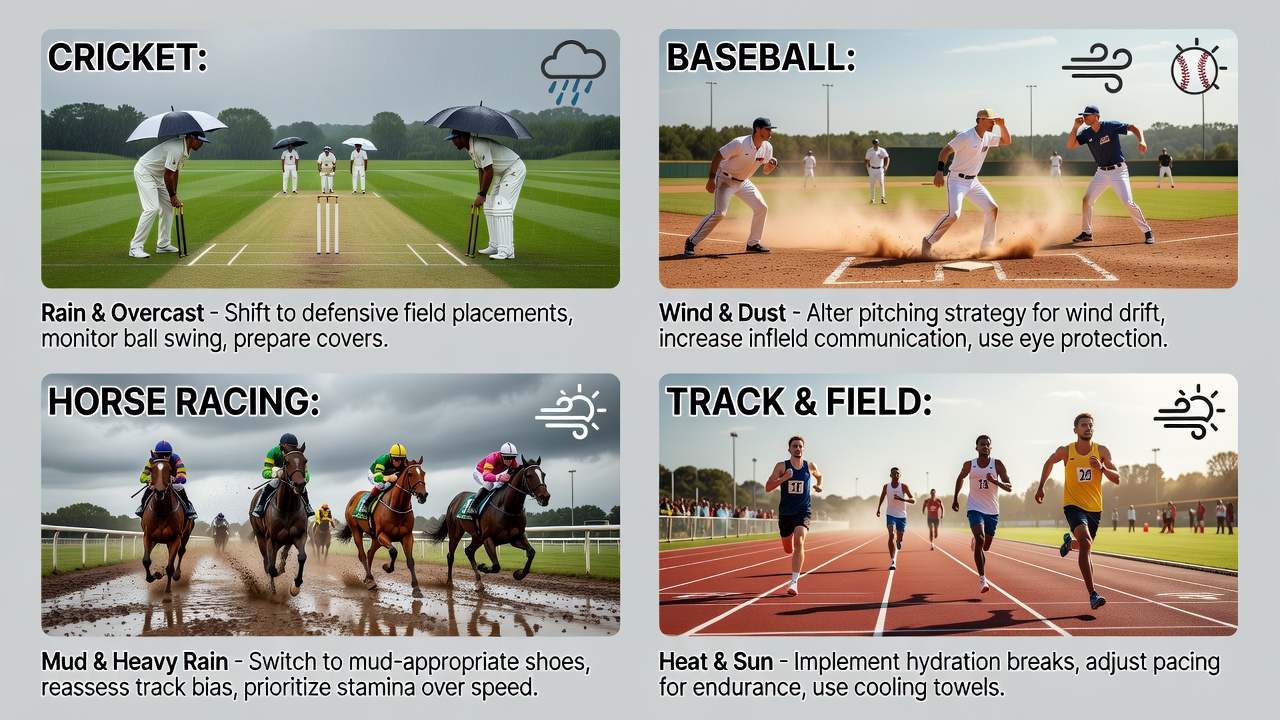
Cricket matches often span multiple days, so teams monitor forecasts closely to decide on batting orders adn bowling rotations when moisture levels fluctuate. Heavy rainfall can turn grass into slower surfaces that favor spin bowlers, and studies from the Australian Bureau of Meteorology highlight how humidity above 70 percent increases swing movement for seam deliveries. Captains adjust field placements accordingly, moving players deeper to account for reduced bounce, while bowlers select different grips and seam angles to exploit the conditions. Observers note that in November 2026, several test series scheduled in regions with monsoon patterns will require similar preparations based on historical climate records.
Baseball and Wind Effects on Ball Trajectory
Baseball strategies shift when gusts exceed 15 miles per hour, as outfielders reposition to cover altered fly ball paths and pitchers modify release points to counteract lateral movement. Research published by the National Oceanic and Atmospheric Administration demonstrates that temperature drops below 50 degrees Fahrenheit reduce ball carry distance by measurable margins, prompting managers to prioritize contact hitters over power specialists. Ground crews apply drying agents to infield dirt during light rain, yet teams still adapt defensive alignments to handle slower hops. One analysis of major league games revealed that wind patterns in open stadiums correlate with higher error rates when outfielders misjudge trajectories under changing conditions.
Horse Racing and Track Surface Adaptations
Track conditions in horse racing change rapidly with rainfall, leading trainers to switch horses to those better suited for soft or heavy ground while jockeys alter riding styles to maintain balance on yielding surfaces. Records from the Hong Kong Jockey Club show that moisture content above certain thresholds increases race times by several seconds per furlong, influencing betting odds and race-day selections. Handlers apply different shoe types for traction, and race officials may delay starts until visibility improves during fog or heavy showers. Data collected over multiple seasons indicates that turf courses respond differently to precipitation compared with synthetic tracks, which drain more efficiently and maintain consistent speeds.
Controlled Environments in Basketball and Ice Hockey
Basketball arenas and ice hockey rinks operate under regulated temperatures and humidity levels that eliminate external weather interference, allowing teams to focus on set plays and conditioning without surface variability. League guidelines from organizations such as the National Hockey League specify ice thickness and arena climate settings that remain constant across venues, resulting in predictable puck behavior and player movement. Basketball courts maintain uniform bounce characteristics regardless of outside conditions, so coaches emphasize offensive schemes and defensive rotations that rely on consistent footing. Studies conducted by European sports science centers confirm that athletes in these settings experience fewer disruptions from environmental factors, though they must still account for crowd noise and lighting consistency.
Comparative Strategic Implications
Outdoor competitors develop contingency plans for sudden weather changes, whereas indoor athletes refine skills within predictable parameters that support repetitive practice drills. Equipment choices in cricket and baseball respond to wind and moisture, while basketball footwear and ice skates remain optimized for fixed surfaces. Analysts from university programs in Canada and Australia have compared injury rates across these sports, finding that outdoor events show higher correlations with weather-related slips and strains during transitional conditions. Teams in controlled venues allocate more resources to video analysis and opponent scouting, since environmental adjustments occupy less preparation time.
Conclusion
Patterns observed across these disciplines illustrate how weather introduces dynamic elements that demand ongoing tactical flexibility in cricket, baseball, and horse racing, in contrast to the stable frameworks that support precise execution in basketball and ice hockey. Continued collection of meteorological and performance data will refine these understandings as seasonal events unfold.