Tracing the Development of Protective Equipment Standards in Contact Sports
Written by Gisela Richter · Sep 10, 2026
Tracing the Development of Protective Equipment Standards in Contact Sports
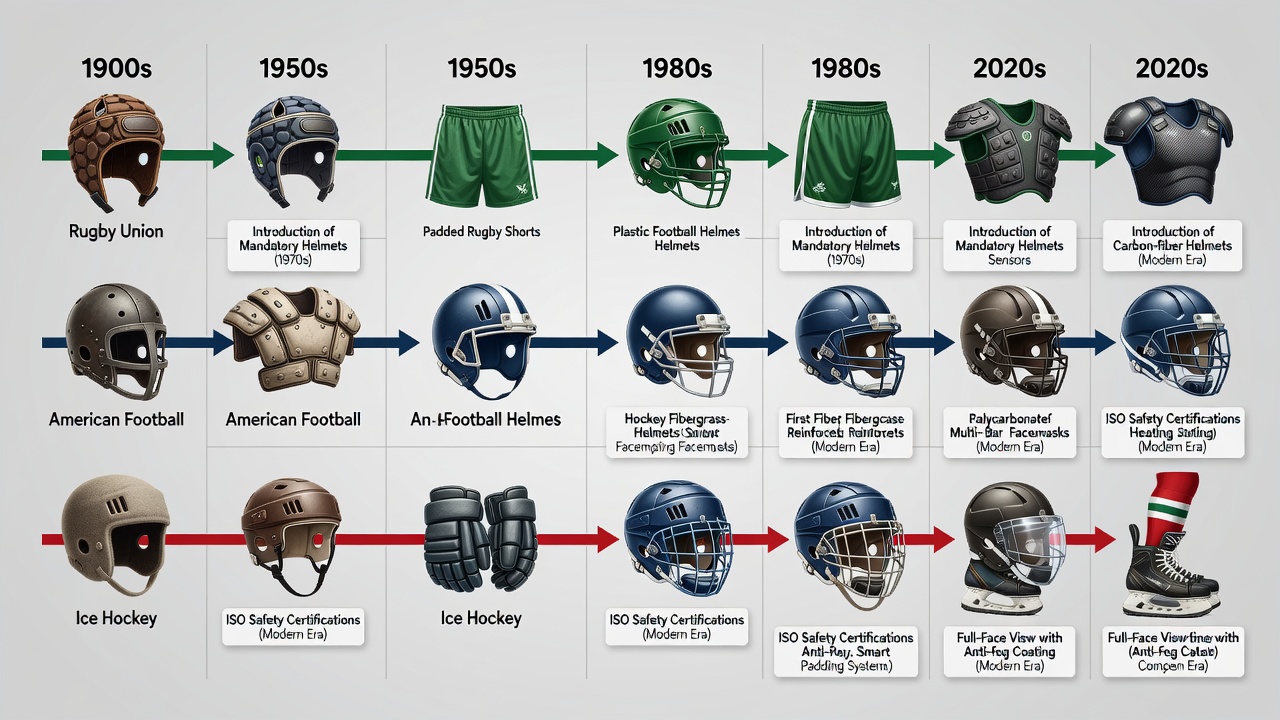
Protective equipment standards in contact sports have evolved through decades of research, injury data analysis and collaboration between governing bodies, manufacturers and medical experts. Rugby union, American football and ice hockey each followed distinct paths shaped by the unique demands of the game yet all converged on principles of impact absorption, concussion reduction and player safety protocols that continue to adapt as new evidence emerges.
Rugby Union Equipment Evolution
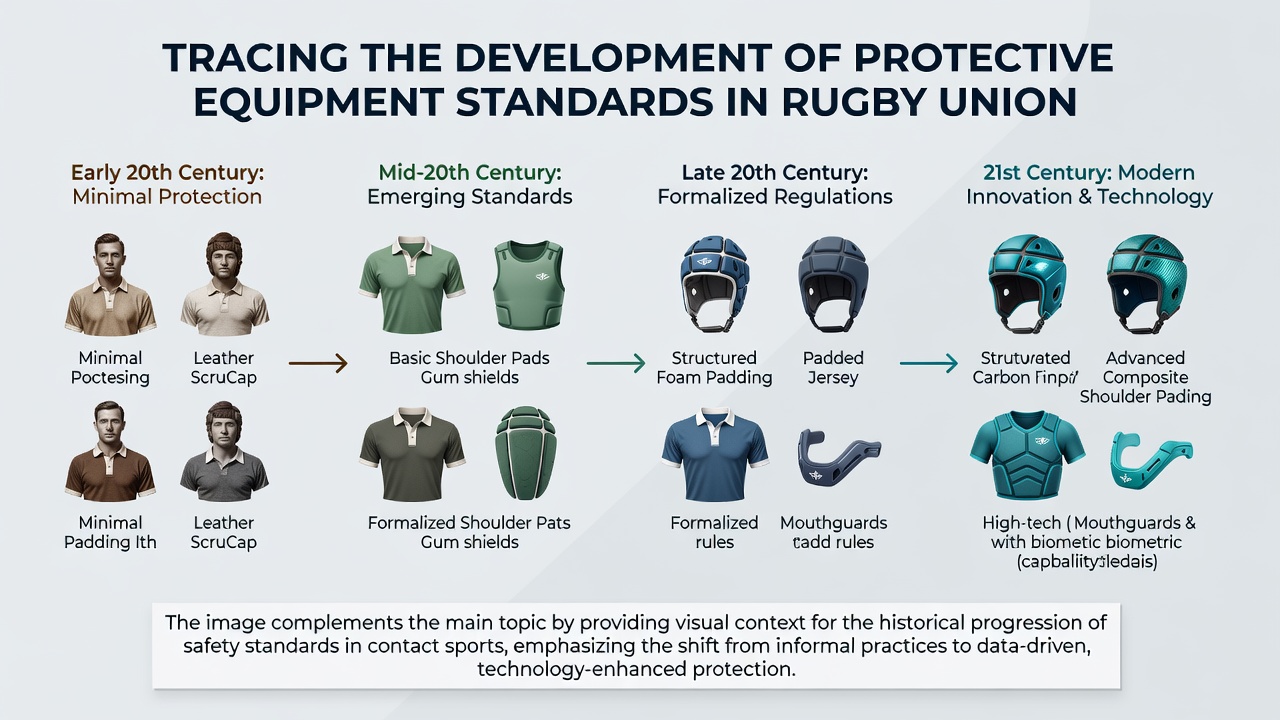
Rugby union maintained a relatively minimalist approach to protective gear for much of its history, with early players relying primarily on padded jerseys and basic headgear made from leather or foam. World Rugby introduced formal standards for headgear in the late 1990s after studies linked repeated head impacts to long-term cognitive issues, requiring all approved scrum caps to meet specific shock absorption criteria tested under laboratory conditions. Mouthguards became mandatory at elite levels following data collected across international competitions that showed reduced dental injuries and lower concussion rates when properly fitted devices were used consistently.
Scrum caps and shoulder padding received updated specifications in subsequent years as researchers examined force transmission during tackles and rucks. The organisation now requires annual retesting of equipment models while also publishing guidelines that distinguish between protective and performance-enhancing designs to maintain the physical nature of the sport without unnecessary armour.
American Football Helmet Standards
American football took a more aggressive route toward layered protection starting in the early twentieth century when leather helmets gave way to plastic shells after World War II technology became available to civilian manufacturers. The National Operating Committee on Standards for Athletic Equipment established its first helmet standard in 1973 following epidemiological studies that documented rising head and neck trauma across college and professional levels. Subsequent revisions incorporated face mask requirements, chin strap retention tests and rotational force measurements that addressed emerging concussion research.
By the 2000s the NOCSAE standard incorporated linear and oblique impact testing protocols that forced manufacturers to redesign padding systems and shell geometries. Professional leagues adopted these benchmarks while also funding independent research facilities that track on-field performance through sensor-embedded helmets. Equipment recertification cycles now occur every two years for most scholastic and collegiate programs, creating a continuous feedback loop between usage data and laboratory standards.
Ice Hockey Protective Developments
Ice hockey standards developed under the dual influence of the International Ice Hockey Federation and national associations that responded to high-speed puck impacts and board collisions. Full facial protection became compulsory for junior players in the 1980s after Canadian and European injury registries showed sharp declines in eye and dental trauma once certified cages and visors were required. The IIHF later harmonised helmet and visor performance criteria across member federations, mandating impact testing at multiple temperatures to simulate arena conditions.
Shoulder pads, elbow guards and shin protectors followed similar trajectories with performance thresholds updated after biomechanical studies examined slash forces and fall dynamics. Goaltender equipment received separate attention because of its bulk and the unique angles of shots faced, leading to size restrictions that balance protection with mobility. In September 2026 several IIHF member nations plan to implement revised neck guard attachment standards following analysis of laceration incidents collected over the previous five seasons.
Cross-Sport Influences and Ongoing Refinement
Shared research findings have allowed each sport to borrow testing methodologies from the others. Rugby union adopted rotational acceleration metrics first refined in American football helmet studies while ice hockey governing bodies examined rugby scrum cap retention systems when developing new ear protection modules. Data sharing agreements between organisations now facilitate quicker incorporation of sensor technology that records real-time head movement during games and practices.
Manufacturers must navigate differing certification timelines across regions yet increasingly align product lines to meet the strictest available benchmarks. Academic institutions in North America, Europe and Oceania contribute peer-reviewed validation studies that feed directly into standard revision cycles, ensuring updates reflect both clinical outcomes and field performance.
Conclusion
The progression of protective equipment standards across rugby union, American football and ice hockey reflects sustained attention to injury patterns, laboratory innovation and regulatory coordination. Each sport maintains distinct rules of play while drawing on common scientific foundations that continue to shape equipment design and testing requirements into the coming years.