Evolution of Timing Mechanisms for Precise Event Tracking in Greyhound Racing Alongside Baseball Innings
Written by Anna Lehmann · Sep 24, 2026
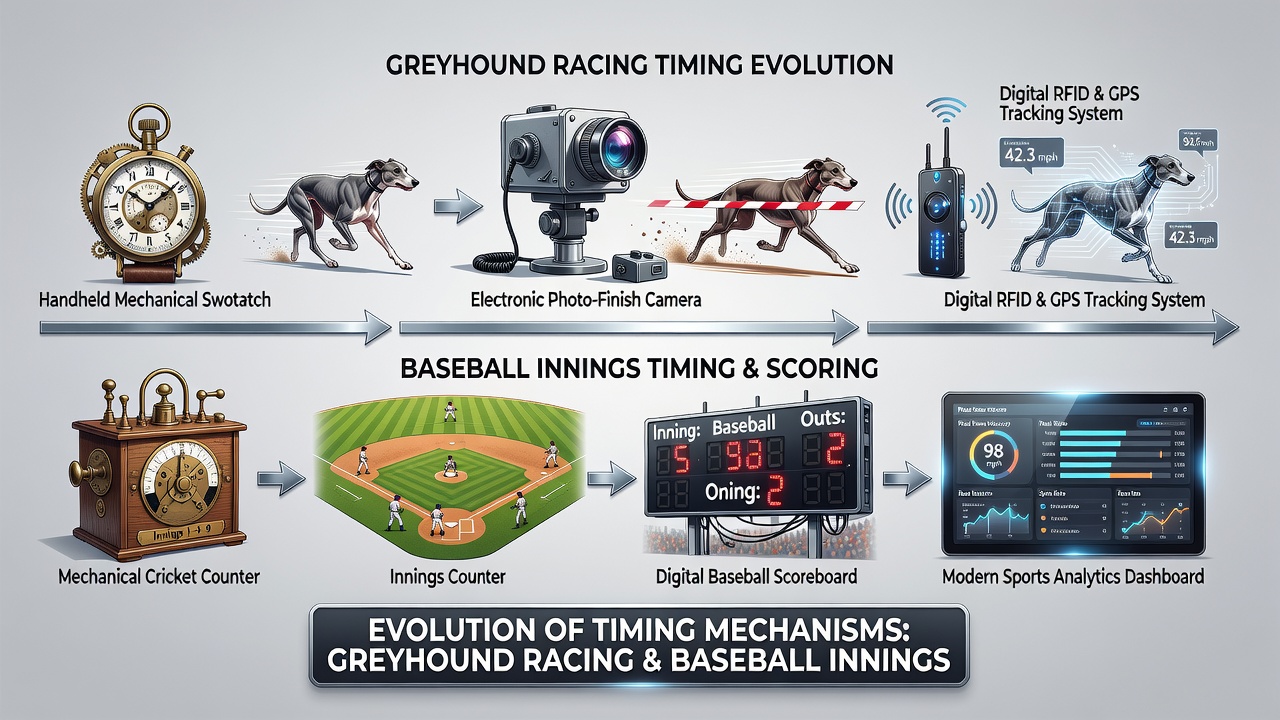
Evolution of Timing Mechanisms for Precise Event Tracking in Greyhound Racing Alongside Baseball Innings
Timing mechanisms in greyhound racing and baseball have developed through distinct yet parallel paths that emphasize accuracy in event tracking, and researchers trace these changes from manual methods in the early twentieth century to integrated electronic systems used today. Greyhound events rely on split-second measurements for race finishes while baseball tracks pitch durations and inning transitions with increasing precision, and both sports adopted technologies that reduced human error in official records. Data from industry reports indicate that photo-finish systems entered greyhound racing during the 1940s, whereas baseball maintained hand-operated scoreboards until electronic clocks appeared in major league venues by the 1970s.
Initial Mechanical Approaches in Both Sports
Manual stopwatches formed the foundation for timing in greyhound racing, where officials recorded elapsed times at the finish line, and similar devices measured the length of each baseball inning through pitch counts and player movements. Observers note that these methods introduced variability because reaction times differed among timers, yet they remained standard until electromagnetic beams replaced them in racing circuits across Australia and the United States. In baseball, scorers logged inning starts and ends on paper ledgers, and studies from sports engineering groups show that this practice persisted until automated pitch clocks emerged in minor leagues during the 1990s.
Transition to Electronic and Photo-Based Systems
Electronic timing beams crossed the track in greyhound racing by the late 1950s, triggering instant readings when dogs broke the light path, and this advancement allowed judges to confirm results within milliseconds rather than relying solely on visual estimates. Baseball followed a comparable shift when stadiums installed digital inning clocks during the 1980s, enabling scorekeepers to monitor elapsed time between halves and reduce delays. Figures from racing associations reveal that photo-finish cameras, synchronized with beam triggers, became mandatory in sanctioned greyhound events by 1965, while baseball leagues introduced radar guns for pitch speed alongside basic timers in the same decade.
Integration of Digital Sensors and RFID Technology
Radio-frequency identification tags attached to greyhounds provided continuous position data starting in the early 2000s, and these devices transmitted signals to central computers that calculated sectional times throughout each race. Baseball adopted comparable sensor arrays on bases and balls during the 2010s, allowing systems to log exact moments when runners crossed home plate or when innings concluded. One study conducted by university researchers in Canada documented how RFID reduced timing discrepancies in greyhound events by over 90 percent compared with earlier beam methods, and similar data from American sports laboratories confirmed parallel improvements in baseball inning verification.
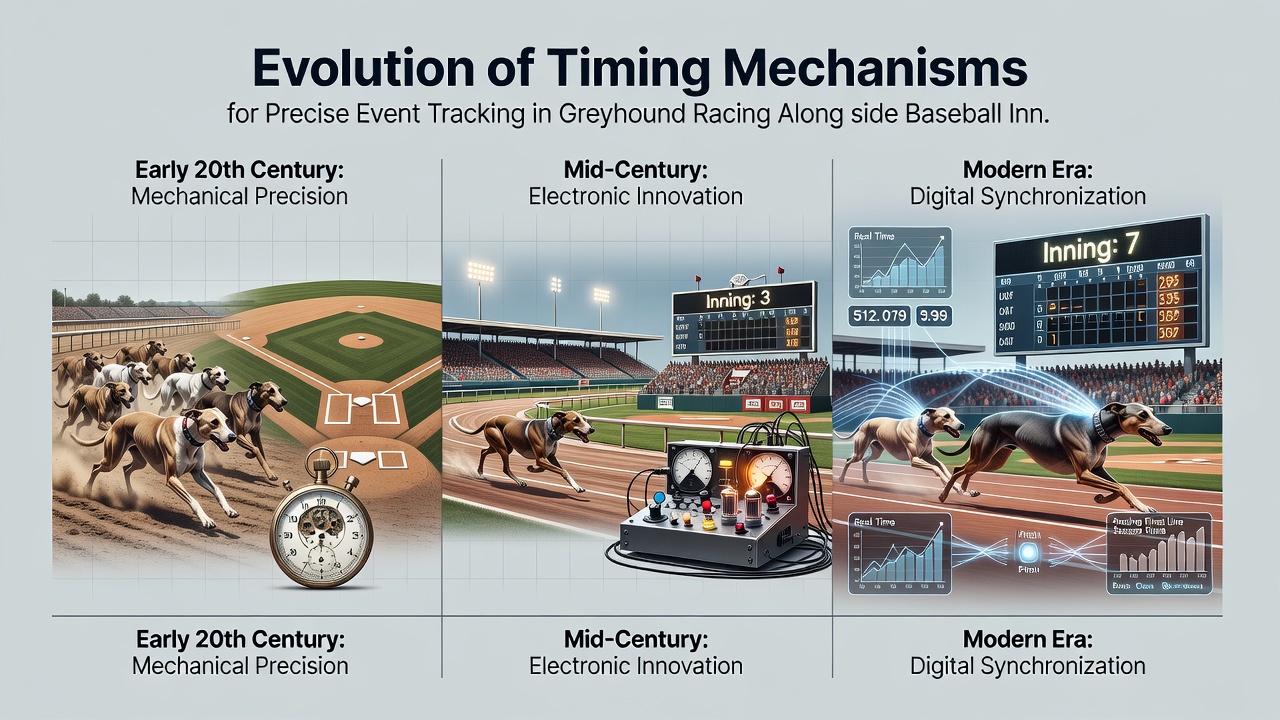
Automated video review systems supplemented these sensors in both disciplines, and footage captured at high frame rates enabled officials to verify close finishes or inning boundaries when disputes arose. As of September 2026, several greyhound tracks in Europe have begun testing laser-based timing grids that overlay multiple data streams, while major league baseball continues to refine pitch-clock integration introduced league-wide in 2023. These updates connect directly to earlier electronic foundations because they build on the same principle of eliminating subjective judgment calls.
Comparative Developments Across Regions
Australian greyhound authorities implemented centralized timing databases in the 1990s that stored every sectional split for post-race analysis, and this approach influenced later baseball initiatives where inning duration statistics informed rule adjustments. European racing bodies adopted similar databases shortly afterward, whereas North American baseball organizations focused first on pitcher-specific timers before expanding to full inning tracking. Reports from the Australian Sports Commission highlight how greyhound timing accuracy improved steadily through successive hardware upgrades, and parallel research from U.S. academic institutions shows comparable gains in baseball event logging.
Wireless synchronization between starting gates and finish lines became standard in greyhound venues during the 2000s, reducing signal lag that once affected older wired systems, and baseball stadiums incorporated equivalent wireless networks to link pitch clocks with scoreboard displays. Those who have examined archival records find that both sports encountered initial resistance to new timing equipment because officials needed training on calibration procedures, yet adoption accelerated once governing bodies mandated compliance.
Current Standards adn Data Management
Modern timing consoles in greyhound racing combine beam triggers, RFID readings, and high-speed video into unified outputs that feed directly into official result platforms, and baseball employs integrated pitch clocks connected to replay centers for real-time inning oversight. Industry organizations report that these consolidated systems now handle thousands of events annually with sub-millisecond precision, and data storage protocols ensure historical comparisons remain available for rule evaluations. External sources such as the Australian Sports Commission and the Major League Baseball official records document these ongoing refinements without prescribing future directions.
Conclusion
The parallel evolution of timing mechanisms demonstrates how greyhound racing and baseball each refined event tracking through incremental technological steps that addressed specific accuracy challenges. Electronic beams, RFID integration, and automated video review now operate alongside one another in both sports, and September 2026 marks continued testing of laser grids in select greyhound facilities while baseball maintains established pitch-clock protocols. These developments rest on documented transitions from mechanical devices to sensor-driven platforms that deliver consistent, verifiable results across jurisdictions.